


During the Viking Age (about 800–1050 AD), mainland Åland already had a fairly large population. This is evident from the nearly 400 burial sites found across the island. However, the eastern archipelago show no signs of settlement from that time. These islands were likely settled later, in the early Middle Ages, as trade between Stockholm, Reval, and Åbo grew
The first named person from Lappo appears in written sources from 1517. His name was Vaste Persson, and he was a farmer at the farmstead Pellas. The island of Lappo was barren and bare. Because of this, small-scale farming was supplemented by fishing, hunting, and livestock. Everyday life was also dependant on trade. Each year, farmsteads sold parts of what they produced in order to buy necessary goods such as salt, grain, hemp, malt, cloth, and tar. This is why, in 1517 in Reval (now Tallinn), Vaste Persson appears in the merchant Ficke’s accounts. Vaste is also mentioned in tax records from the 1530s together with four other farmers in the village.
In 1935, a village boy, ”Skräddars Birger”, made a strange discovery while working in the part of Österåker (shown above) that belongs to the farmstead Arstu. The find appeared to be a brass ring. Later studies showed that it was in fact made of gold, and dated from the Roman Iron Age (0–400 AD). At that time, the sea level was 6–8 meters higher than today, so the ring may have been lost in the sea during a trading journey. The “Lapporingen” is one of the most unusual finds on Åland from this period. There are only 26 similar rings from the Roman Iron Age in all of Scandinavia, and this find shows that people moved through this area long before the time of Vaste Persson.
Read more about the history of the village and the farmsteads during the walk around the village. Welcome!
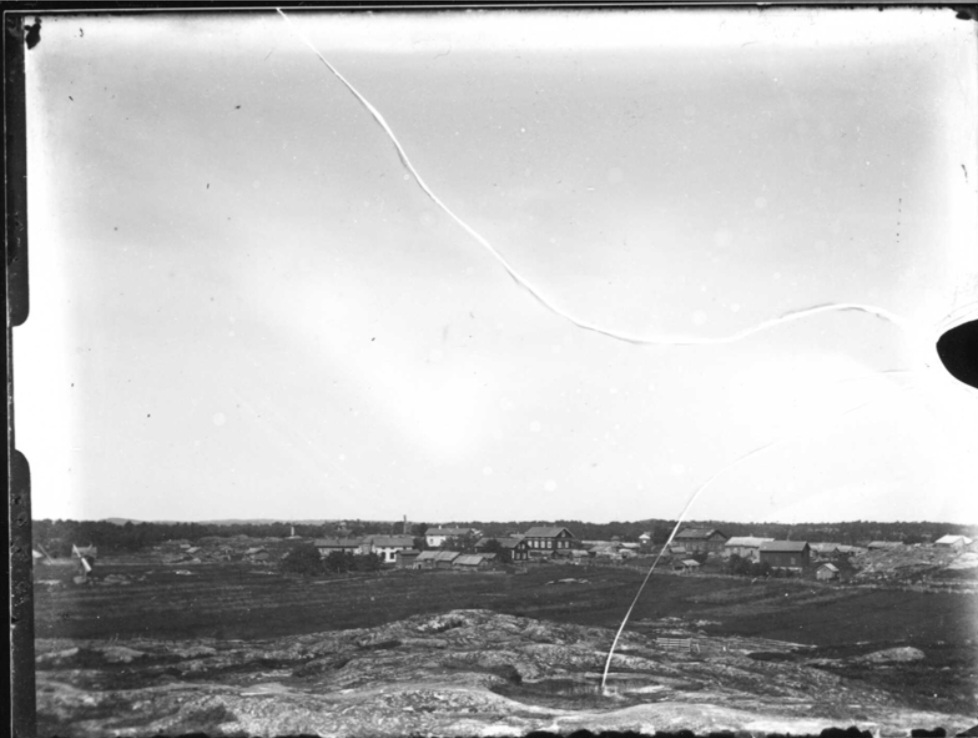
View of the village, seen from the south. Photo: Väinö Solstrand, 1907.
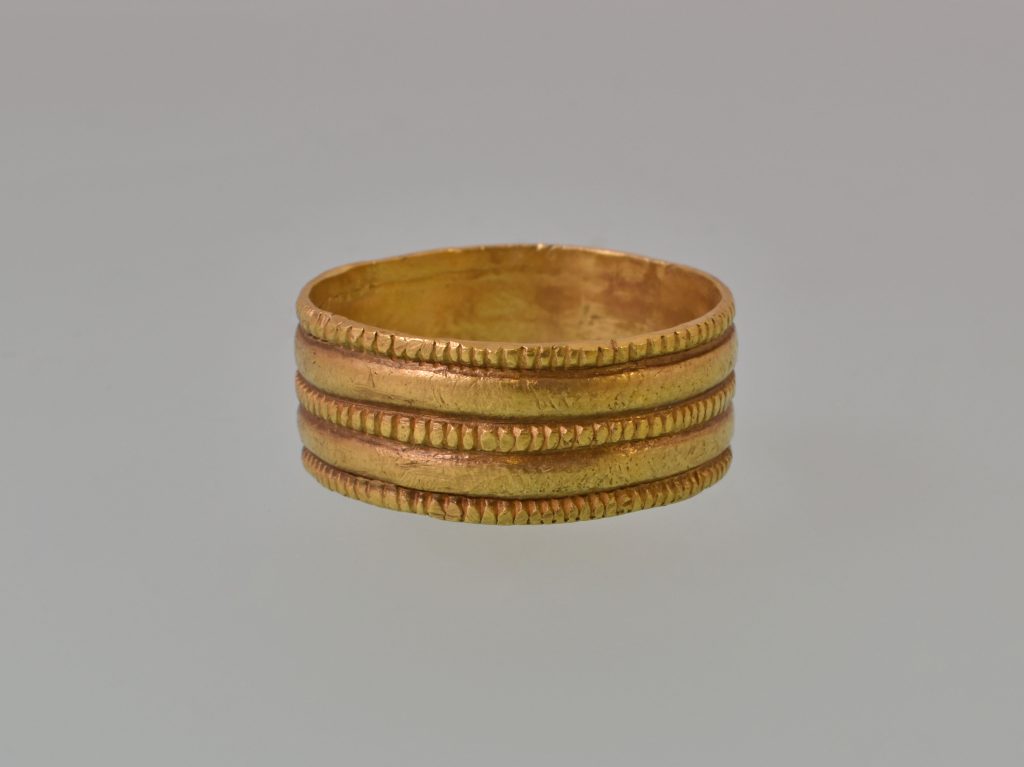
The “Lapporingen” found in 1935 is kept at the Åland Museum of Cultural History.